
Menopause Brain Changes: Hormones, Gray Matter, and New Research Insights
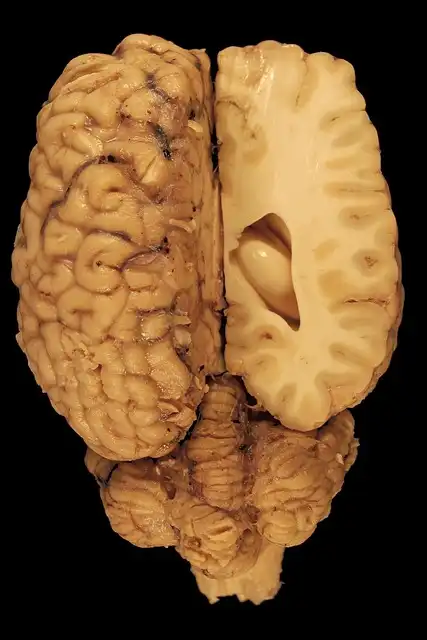
New research suggests a surprising pause in gray matter reduction during menopause, unlike changes seen in menarche and pregnancy. The study highlights the critical need for more research into how hormonal shifts impact the brain throughout a woman's life.
We go to a vital time and supporting scientific research journalism
is more crucial than ever. Scientific research News and our
moms and dad company, the Culture for Scientific research, need your aid to enhance
clinical proficiency and guarantee that important societal decisions are made
with science in mind.
Advancing Menopause Brain Research
Since there’s so little study on the brain during menopause, “this is a much-needed piece of work,” claims Susana Carmona, who examines mother’s brain health at Instituto de Investigación Sanitaria Gregorio Marañón in Madrid. The gray matter time out throughout menopause could be a useful first action as scientists look a lot more closely at hormonal declines in the years prior, and their prospective effects on the brain.
Since there’s so little study on the brain throughout menopause, “this is a much-needed item of work,” says Susana Carmona, who examines maternal mind health at Instituto de Investigación Sanitaria Gregorio Marañón in Madrid.
Hormonal Effects on Brain Volume
In a study of greater than 1,000 women brains, brain noodle quantity lowered at menarche and again while pregnant, modifications that are irreversible and unique from age-related decrease. There was no adjustment during menopause, scientists report September 8 in Nature Communications. The outcomes are unusual, however hint at how hormone flows and ebbs over the life time are shown in brain structure.
It may make sense, in concept, that the hormonal reductions of menopause might do the opposite– boost grey matter. Whether grown-up human minds can even make new nerve cells is debatable.
Mind scans at the age of puberty (in the past, during and after the begin of menarche) and maternity (never ever expecting, first pregnancy, 2nd pregnancy) reveal declines in noodle by regarding 0.1 percent. Hormonal agent rises throughout those life stages are linked to the mind modifications. Menopause, however, is characterized by a reduction in flowing hormones. Brain scans expose that at menopause (before, throughout and after), the regular small decreases in gray matter stop, and smarts does not show up to change at all.
In a study of even more than 1,000 women brains, mind grey matter quantity lowered at menarche and again throughout maternity, modifications that are long-term and unique from age-related decline. The researchers ended up with a set of 1,095 scans, consisting of adolescent minds pre- and post-menarche, and grown-up minds pre- and post-pregnancy and pre- and post-menopause, compared with hormonally stable controls.
Menopause: A Gray Matter Stability
While there were anticipated age-related decreases in gray matter quantity in minds prior to and after menopause, during menopause, that usual reduction ceased.
The lack of change throughout menopause could appear shocking for those that have been through it and experienced the mind fog, rest adjustments and state of mind changes. “Just seeing that there’s a time out in gray matter is not an indication there’s nothing taking place,” van’t Hof states.
Scientific research News was founded in 1921 as an independent, nonprofit resource of exact information on the current information of medication, science and modern technology. Today, our goal stays the same: to encourage people to assess the news and the world around them. It is published by the Culture for Science, a not-for-profit 501(c)( 3) subscription organization committed to public engagement in clinical research and education and learning (EIN 53-0196483).
As anticipated, the researchers saw noodle decreases in the cortex– the external layer of the brain– associated with pregnancy and menarche. But they observed no decreases in noodle throughout menopause. As a matter of fact, while there were anticipated age-related reductions in gray matter volume in brains before and after menopause, throughout menopause, that typical reduction discontinued.
Few research studies have actually analyzed brain changes across menopause. van’t Hof and her associates assessed information from architectural MRI studies at Leiden University and the UK Biobank. The researchers ended up with a collection of 1,095 scans, consisting of teen minds pre- and post-menarche, and grown-up brains pre- and pre and post-pregnancy- and post-menopause, compared with hormonally steady controls.
Mind scans disclose that at menopause (previously, throughout and after), the typical small declines in gray issue cease, and grey matter doesn’t appear to transform at all.
Lifespan Brain Dynamics & Hormone Shifts
“People usually assume the brain is just done when you’re an adult, yet it alters throughout life,” says Sophie van’t Hof, a cognitive neuroscientist at Amsterdam University Medical Centre. “We see these tiny noodle decreases throughout the whole life,” she says.
In addition to age-related changes, the brain responds to hormonal agent modifications, particularly the extreme hormone shifts in maternity and puberty. During pregnancy, general brain quantity will certainly reduce by about 4 percent, something van’t Hof refers to as “neural fine-tuning.” The mind isn’t shedding function; it is remodeling, planning for parent.
1 brain changes2 gray matter
3 hormonal shifts
4 Live Scientific research
5 menopause
6 women's health
« Remarkable Mastodon Tooth Discovery Sheds Light on Glacial PeriodUnlocking Ancient Texts: New Method Reads Carbonized Scrolls »