
Katalyst Mission to Refuel NASA’s Swift Observatory Faces Setbacks
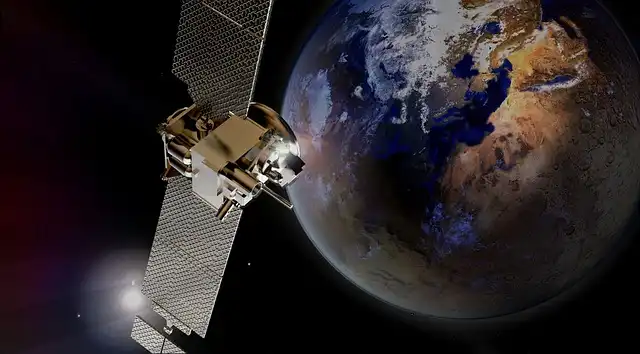
Katalyst's mission to refuel NASA's aging Swift Observatory is delayed due to unexpected spacecraft rotation issues. Teams are working to stabilize the spacecraft and reschedule the rendezvous before Swift falls back to Earth.
Katalyst’s best objective is to reboost and refuel Swift to ensure that the observatory, worth approximately $450 million today when accounting for rising cost of living, will have the ability to proceed its objective. (The mission price $250 million in 2004, which is much cheaper than the $10 billion James Webb Area Telescope that released virtually five years back.).
Call me with news and provides from other Future brandsReceive email from us in behalf of our trusted companions or sponsorsBy submitting your information you agree to the Terms & Conditions and Privacy Policy and are aged 16 or over.
Swift Observatory: A Legacy Telescope
All the troubleshooting has actually postponed Web link’s expected arrival near NASA’s Swift Observatory– a tradition telescope created to spot gamma-ray outbursts– right into late August. NASA has kept in mind that other systems on Web link are functioning well. “The spacecraft remains power positive and in interaction with the Katalyst team,” NASA authorities wrote in a Tuesday (July 28) update. Thinking Web link’s mindset stabilizes and the spacecraft is healthy enough, teams “will certainly after that examine changed strategies to technique and capture Swift,” NASA specified.
Swift was originally mostly entrusted with checking out gamma-ray ruptureds, which are huge explosions that occur after a passing away and huge celebrity collapses into a great void. Swift has actually gathered many monitorings of these ruptureds, yet it additionally looks at various other stellar adjustments (like supernovas or X-ray flares) as well as relocating items like planets and comets.
“Swift is NASA’s multitool when it comes to examining the universes,” S. Bradley Cenko, Swift’s primary private investigator and an astrophysicist at NASA’s Goddard Area Trip Center, stated in the declaration.
Elizabeth Howell was team reporter at Space.com in between 2022 and 2024 and a normal factor to Live Scientific research and Space.com between 2012 and 2022. Elizabeth’s reporting includes numerous exclusives with the White Home, talking numerous times with the International Space Station, seeing five human spaceflight launches on two continents, flying allegorical, working inside a spacesuit, and taking part in a substitute Mars mission. Her most current publication, “Why Am I Taller?” (ECW Press, 2022) is co-written with astronaut Dave Williams.
Katalyst’s Link Spacecraft Challenges
Katalyst’s web link spacecraft introduced July 3 from a mid-air Northrop Grumman Pegasus XL rocket mounted aboard a modified Lockheed Martin L-1011 airliner. The spacecraft took off after less than a year of advancement, on an objective to capture NASA’s almost 22-year-old Neil Gehrels Swift Observatory before the telescope drops back to Planet.
NASA has noted that other systems on web link are working well. “The spacecraft stays power positive and in communication with the Katalyst team,” NASA authorities composed in a Tuesday (July 28) upgrade. Assuming LINK’s mindset maintains and the spacecraft is healthy sufficient, groups “will certainly then assess changed strategies to technique and capture Swift,” NASA mentioned.
As of Thursday (July 30), Katalyst’s objective blog stated designers minimized the rotation with engine fires from the spacecraft, which work is continuous to support the spacecraft. LINK is now spinning at four levels a second, rather than the previous 9.
Technical Glitches and Mission Delays
All the troubleshooting has actually postponed LINK’s anticipated arrival near NASA’s Swift Observatory– a legacy telescope designed to identify gamma-ray outbursts– into late August. Time is essential, as Swift is anticipated to drop also much for assistance by autumn. The observatory has actually currently lowered its science work to stay as streamlined as possible, so that drag does not pull it right into the environment this summer.
A private mission to rescue a troubling NASA space telescope might now require a rescue of its very own. The web link spacecraft– made by personal business Katalyst Area to enhance the orbit of NASA’s ageing Swift Observatory– is supposedly rotating suddenly in the weeks after its launch, so much to make sure that maintaining the spacecraft will likely delay the telescope rescue.
Its scientific research continues to be important, a recent NASA statement kept in mind. “Swift is NASA’s multitool when it comes to studying the universes,” S. Bradley Cenko, Swift’s major investigator and an astrophysicist at NASA’s Goddard Area Flight Facility, stated in the statement. “It observes the skies making use of a vast array of light, and rapidly factors at short-lived outbursts, signaling various other centers in space and on the ground to help collaborate follow-up monitorings.”.
Efforts to Stabilize and Rescue
NASA manager Jared Isaacman claimed there’s still time. “We are not giving up yet,” he created late Thursday (July 30) on X. “This stays an extremely cool, very low-priced, high-potential, high-reward objective, and an additional step towards an extra independent future where objectives like this regularly upgrade, fixing, service, and enhance satellites.”
Swift must remain above a minimal rescue altitude of 185 miles (298 kilometers) for the objective to prosper, firm versions recommend. For comparison, the International Spaceport station generally operates at around 250 miles (400 kilometers) in altitude.
Web link was meant to rendezvous with Swift regarding a month after its early-July launch, but now it resembles late August is the earliest feasible date, according to the current update. That’s because the $30-million web link began rotating in current days after electric power problems influenced two of the gadgets that manage the spacecraft’s alignment, referred to as response control system (RCS) wheels. Just one of the 3 RCS is functioning effectively.
While groups at NASA and Katalyst are striving to maintain the new LINK spacecraft, the next few weeks will certainly be a fragile balance of obtaining web link prepared prior to Swift falls back to Earth (which is expected to happen this fall), while not putting Swift at excessive danger.
1 gamma-ray bursts2 Hubble Space Telescope
3 Katalyst
4 orbital mechanics
5 space mission
6 Swift Observatory
« Dr. Selwyn Rogers Jr. on Tackling Gun Violence as a Public Health Crisis in ChicagoAncient Mammal Migration: Mexico’s Crucial Role in North-South American Exchange »