
T. Rex Was Warm-Blooded: New Study Estimates Dinosaur Body Temperature
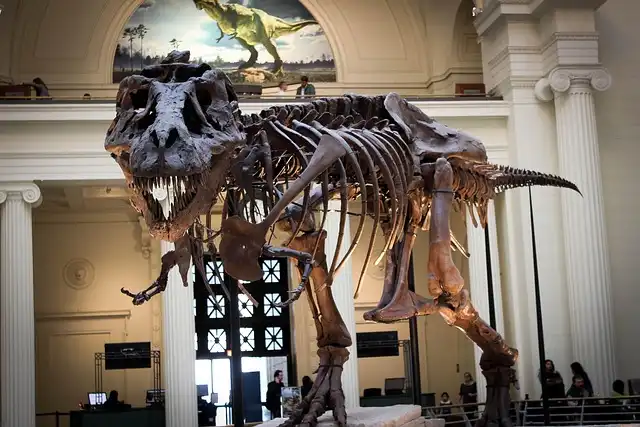
Researchers estimated T. rex's body temperature to be 97.3°F (36.3°C), comparable to humans and elephants, indicating it was a warm-blooded, active predator. This finding impacts understanding of its habitat and behavior during the Cretaceous period.
Unlocking Dinosaur Physiology Through Isotope Analysis
T. rex, which lived in between concerning 68 million and 66 million years earlier, at the end of the Cretaceous duration (143.1 million to 66 million years ago), was one of the biggest carnivorous dinosaurs that ever lived.
Uncommon, heavy isotopes of carbon and oxygen bond with each other in different ways in expanding tooth enamel depending upon the temperature level. The number of bonds developed in between these unusual isotopes is higher at cooler temperatures than it is at warmer temperature levels, which suggests warm-blooded, or endothermic animals, that can regulate their very own body temperature level, have fewer of these chemical bonds in their teeth than cold-blooded, or ectothermic, animals, which count on their environment for heat.
Estimating T. Rex’s Body Temperature
Chris Simms is a self-employed reporter who formerly operated at New Researcher for more than 10 years, in functions including chief subeditor and aide news editor. He was also a senior subeditor at Nature and has a degree in zoology from Queen Mary University of London. In recent times, he has written countless posts for New Scientist and in 2018 was shortlisted for Best Newbie at the Organization of British Science Writers awards.
Previous researches have actually currently suggested thatT. rex and its family members were warm blooded, and now researchers have approximated the dinosaur’s body temperature for the first time by examining various isotopes, or types, of the same chemical elements in the enamel of 3 T. rex teeth from specimens discovered in the Hell Creek Development in Montana.
They put the T. rex body temperature at 97.3 degrees Fahrenheit (36.3 levels Celsius), comparable to that of a human or an elephant. Modern, cold-blooded reptiles have a tendency to have lower body temperatures of regarding 82-86 F (28-30 C), while a lot of birds– offspring from T. rex’s branch of dinosaurs– often tend to be much warmer at 104-109 F (40-43 C). Chris Simms is a self-employed reporter that formerly worked at New Scientist for more than 10 years, in duties consisting of chief subeditor and aide news editor.
Implications for T. Rex Habitat and Behavior
It likewise indicates that throughout the Cretaceous period, one of the warmest periods in Earth’s history, about 11-25 F (6-14 C) warmer than today, T. rex would have had the ability to make it through in the majority of the North American continent, from what is now Mexico approximately cold environments where cold-blooded reptiles would not have made it through. This assists clarify why atyrannosaur fossil has been found in the Kikak-Tegoseak Quarry in Alaska, although there is no trace of various other reptiles like lizards, turtles or crocodiles from that duration in the region.
These searchings for have effects for just how and where the T. rex may have lived. A warm-blooded T. rex would have been an energetic, energetic animal, chasing after or scavenging food to fuel its rapid metabolism instead of basking in the sun to get energy, wrote the writers.
By measuring the bonds in carbon dioxide (CO2) emitted when dissolving little samples from the T. rex teeth, Randon Flores, a rock hound at the University of The Golden State, Los Angeles (UCLA), and his colleagues might estimate where on the scale of pet body temperatures T. rex rested.
Expert Commentary on the Findings
Get in touch with me with news and uses from various other Future brandsReceive email from us in behalf of our trusted partners or sponsorsBy sending your information you agree to the Conditions & terms and Personal privacy Policy and are aged 16 or over.
“The temperature level has to do with what I would have guessed– greater than a reptile or a slow animal like a sloth, however lower than an avian,” research co-author Robert Eagle, a geobiologist at UCLA, stated in astatement.
They put the T. rex body temperature level at 97.3 degrees Fahrenheit (36.3 levels Celsius), comparable to that of a human or an elephant. Modern, cold-blooded reptiles often tend to have reduced body temperature levels of regarding 82-86 F (28-30 C), while most birds– offspring from T. rex’s branch of dinosaurs– have a tendency to be much warmer at 104-109 F (40-43 C). For that reason, these findings, released Wednesday (Sept. 16) in the journal Science Advancements, show how a lot this loved one of modern birds had actually currently split from cold-blooded dinosaurs likeTriceratops andStegosaurus.
1 body temperature2 Cretaceous Period
3 isotopes
4 juvenile T. rex
5 paleontology
6 warm-blooded dinosaur
« Unlocking Ancient Texts: New Method Reads Carbonized ScrollsAncient Eruption Reveals Andean Mountain Building Secrets »