
Ancient Eruption Reveals Andean Mountain Building Secrets
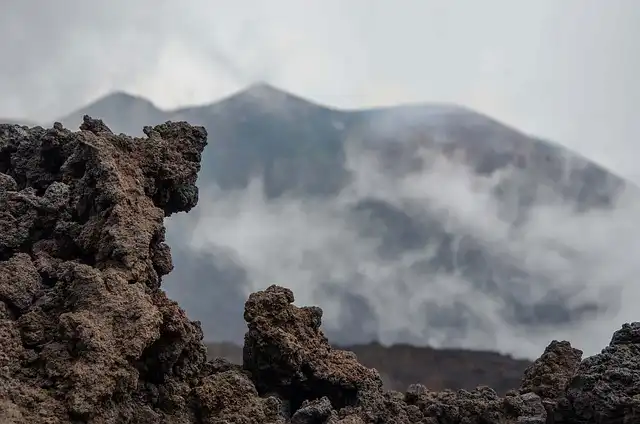
A massive volcanic eruption in Chile buried a landscape, preserving clues about Andean mountain formation. New research suggests a slow, steady uplift of the crust over millions of years.
Contact me with information and provides from various other Future brandsReceive email from us in support of our relied on partners or sponsorsBy submitting your details you agree to the Terms & Problems and Privacy Policy and are aged 16 or over.
Unearthing a Buried Landscape
The eruption, which originated from the Lauca Caldera in what is currently northern Chile, buried the landscape in a development known as ignimbrite. This rock is left over after a pyroclastic circulation– a mix of rock, volcanic gas and ash that sweeps over the landscape like a broiling tidal wave. Pyroclastic circulation is what buried the Roman town of Pompeii after the eruption of Mount Vesuvius in A.D. 79, maintaining structures and individuals where they dropped.
Currently, a brand-new research published Sept. 11 in the journal Science Breakthroughs theorizes the landscape under this Andean ignimbrite, revealing that it needs to have hidden rolling foothills as opposed to rugged peaks.
The eruption, which originated from the Lauca Caldera in what is currently northern Chile, buried the landscape in a development known as ignimbrite. This rock is left over after a pyroclastic flow– a mix of rock, volcanic gas and ash that brushes up over the landscape like a broiling tidal wave. “This research study reveals that much bigger eruptions can likewise freeze minutes in Earth history, hiding whole landscapes underneath volcanic down payments and maintaining clues to how mountains were being developed prior to the eruption.
Debating Andean Mountain Growth
“There is argument over whether the Andes grew slowly and steadily over 40 or 50 million years or whether they increased exceptionally gradually and then popped up extra just recently, in the last six to 10 million years,” Adams said. “Our findings, which cover a big component of the middle of that history, sustain the constant yet slow theory.”
Stephanie Pappas is an adding writer for Live Scientific research, covering subjects ranging from geoscience to archaeology to the human brain and habits. She was previously a senior writer for Live Science but is currently a consultant based in Denver, Colorado, and regularly contributes to Scientific American and The Monitor, the monthly magazine of the American Psychological Association. Stephanie received a bachelor’s degree in psychology from the University of South Carolina and a graduate certification in scientific research interaction from the University of California, Santa Cruz.
The original slope of the volcanic flow from Lauca Caldera was about 1.5 degrees, Adams and his colleagues composed in the new paper. The researchers also computed the disintegration of the landscape to identify exactly how quick the rocks in the location were climbing as the oceanic Nazca Plate pressed under the continental crust of South America, which is exactly how the Andes were developed.
Inferring Hidden Landscapes
They found that before the eruption, the uplift of the crust disappeared than 0.16 mile (0.26 kilometer) per million years– fairly a slow-moving process. This searching for corresponds to earlier job that made use of the formation of particular minerals within rocks to identify when a specific rock rose via the crust and approached the surface.
“Pompeii demonstrates how volcanic eruptions can freeze a moment in human history,” Byron Adams, a geomorphologist at University London, stated in a declaration. “This research study reveals that much larger eruptions can additionally ice up moments in Planet background, burying entire landscapes beneath volcanic deposits and protecting ideas to exactly how mountains were being developed before the eruption. We can not dig to see the hidden landscape, however we can make use of the shape of the volcanic covering and what we understand about just how rivers shape hills to infer what is hidden beneath it.”
1 Andes mountains2 Chile
3 geology
4 ignimbrite
5 paleontology
6 volcanic eruption
« T. Rex Was Warm-Blooded: New Study Estimates Dinosaur Body TemperatureRNA World: Asteroid Impacts & the Dawn of Life on Early Earth »