
Asteroid Ryugu Samples Reveal Essential DNA Building Blocks for Life
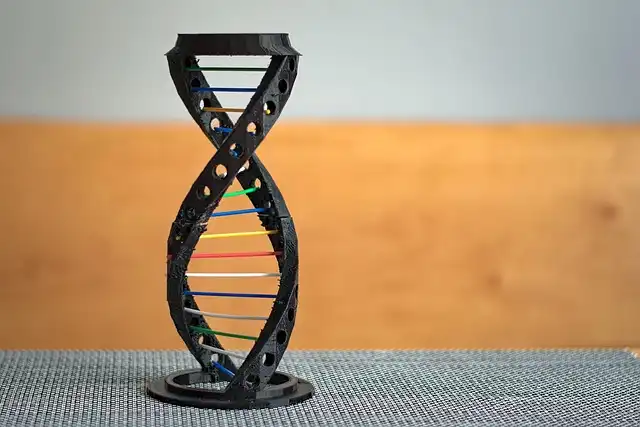
Scientists analyzing JAXA's Ryugu asteroid samples found all five nucleobases necessary for DNA and RNA, suggesting carbonaceous asteroids delivered vital life-forming chemicals to early Earth.
The samples evaluate just 5.4 grams (0.19 ounces) each, much less than the weight of a quarter, yet have actually delighted researchers for several years. Preliminary analysis of a small portion of the tested material in 2023 disclosed that the planet consisted of many of the building blocks for life, consisting of one nucleobase (uracil) and numerous other natural materials, including 15 amino acids, which are the structure of proteins. These are prebiotic particles, and although they’re not life, they’re located in all life.
César Menor Salván, an astrobiologist at the College of Alcalá in Spain that was not involved in the research, emphasized in an interview with AFP that the new results “do not recommend that the beginning of life took place precede.”
This “does not mean that life existed on Ryugu,” study lead author Toshiki Koga, a biogeochemist at the Japan Agency for Marine-Earth Science and Innovation, informed AFP, per Phys.org. “Rather, their visibility shows that primitive asteroids might generate and protect particles that are very important for the chemistry pertaining to the origin of life.”
Preliminary analysis of a little fraction of the tasted material in 2023 disclosed that the asteroid contained numerous of the structure obstructs for life, consisting of one nucleobase (uracil) and numerous various other organic materials, consisting of 15 amino acids, which are the structure of healthy proteins. These are prebiotic particles, and although they’re not life, they’re discovered in all life.
Discovering Prebiotic Chemicals in Space
This moment, the researchers discovered every one of the nucleobases– adenine, guanine, thymine, cytosine and uracil. These all-natural substances mix with ribose and phosphate to form DNA and RNA. The scientists likewise considered the ratio of nucleobases and contrasted them to those found on Bennu and on two meteorites (Murchison and Orgueil) that had actually fallen to Planet.
Patrick Pester is the trending information writer at Live Scientific research. His job has appeared on other scientific research web sites, such as BBC Science Emphasis and Scientific American. He was awarded the Master’s Quality Scholarship to study at Cardiff College where he finished a master’s degree in global journalism.
How Asteroids May Have Seeded Earth
These old rocks are left over from when the solar system was still creating around 4.5 billion years earlier, when the Earth was likewise developing. The detection of nucleobases, for that reason, recommends that carbonaceous asteroids might have aided Earth get its life-forming chemicals.
“The discovery of diverse nucleobases in planet and meteorite products demonstrates their prevalent existence throughout the Solar System and reinforces the theory that carbonaceous planets added to the prebiotic chemical inventory of very early Earth,” the researchers composed in the study.
There’s also a possibility that life– or the structure blocks of life– didn’t develop on Planet at all but were lugged below on asteroids or comets.
Nucleobases are divided right into 2 groups based upon their chemical framework. Adenine and guanine are purines, which are recognized for their double-ring structure, while cytosine, uracil and thymine belong to the single-ring-structured pyrimidines.
Patrick Pester is the trending information author at Live Science. His work has actually shown up on other scientific research sites, such as BBC Science Emphasis and Scientific American.
Analyzing Chemical Pathways and Ammonia
The scientists discovered that Ryugu had equal amounts of purines and pyrimidines, while Bennu and Orgueil were more enriched in pyrimidines and Murchison was extra enriched in purines. Notably, the researchers also identified a strong connection between the purine-pyrimidine ratio and the focus of ammonia in Ryugu, Bennu and Orgueil, suggesting that ammonia, another life-friendly particle, may have been an essential aspect driving similar nucleobase development pathways in the rocks’ distinctive settings, according to the research study.
The Historic Hayabusa2 Sample Return Mission
The Japan Aerospace Exploration Agency (JAXA) accumulated the Ryugu samples as part of its Hayabusa2 objective, which introduced in 2014. The uncrewed Hayabusa2 spacecraft came down on the planet in 2019, prior to gathering 2 dust examples from the asteroid’s surface area and returning them to Earth in 2020.
It’s quick and simple to access Live Scientific research And also, merely enter your email below. We’ll send you a confirmation and authorize you up for our day-to-day newsletter, keeping you approximately date with the most up to date science news.
The scientists spotted a total collection of canonical nucleobases, which are the building blocks for DNA– the hereditary foundation for all life on Earth– and its lesser-known relative RNA, according to a brand-new research study released Monday (March 16) in the journal Nature Astronomy.
Call me with information and provides from other Future brandsReceive e-mail from us in behalf of our trusted companions or sponsorsBy submitting your info you consent to the Terms & Conditions and Personal privacy Plan and are aged 16 or over.
Competing Theories on the Origin of Life
Researchers aren’t certain exactly how life got going in the world. Some theories assume that it stemmed right here, such as in deep-sea vents. There’s additionally an opportunity that life– or the building blocks of life– didn’t create on Earth at all yet were carried right here on asteroids or comets.
1 Artificial space-time2 asteroid Ryugu
3 DNA building blocks
4 Hayabusa2
5 nucleobases
6 origin of life
« Human-Driven Climate Change Slows Earth’s Rotation: Unprecedented Day Length ChangesThe Looming HIV Threat: Will Political Skepticism Reverse Decades of Progress? »