
Meteorite Clues Point to Long-Lost Proto-Planet in Solar System
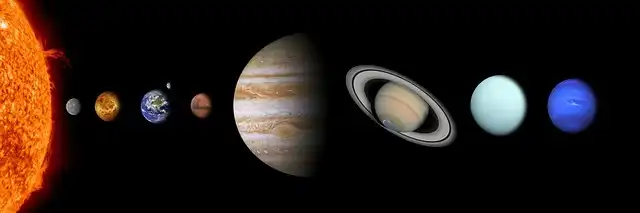
Rare angrite meteorites, like NWA 12774, suggest the existence of a worldly embryo - a proto-planet that orbited the sun billions of years ago before shattering.
The Significance of Angrite Meteorites
Throughout its background, Planet has actually been pestered with plenty of meteorites. About 80,000 have been discovered thus far, however one details team is extremely uncommon– and researchers now believe they can be proof for a long-dead proto-world that made use of to orbit the sunlight.
“It’s extraordinary to think there was once [an additional] globe this big,” study initial author Aaron Bell, a petrologist at the College of Colorado Boulder, said in a statement. “We just recognize it existed due to the fact that a couple of pieces of it happened to arrive on Planet. These meteorites maintained proof of an entirely different pathway where very early earths developed.”.
Evidence of a Massive Parent Body
Such pressures could not have existed inside a little planet, hinting that the parent body of the angrites should have had a distance of a minimum of 621 miles (1,000 kilometers), the researchers composed. The sharp sides on NWA 12774 additional suggest it formed near the surface, indicating the moms and dad body was also larger– with a radius of approximately 1,118 miles (1,800 kilometres). For contrast, Earth’s moon has a radius of 1,080 miles (1,737 km), and Mars has 2,106 miles (3,390 km).
The searchings for, published July 1 in the journal Planet and Planetary Scientific research Letters, tip that this “worldly embryo”– if it existed– was made of angrite and might have been as huge as the moon and even Mars. It’s thought to have orbited the sunlight prior to crashing into one more celestial object and shattering into rubble billions of years ago; sign angrite meteorites falling to Planet.
A “Worldly Embryo” in the Early Solar System
They’re among the earliest well-known rocks in the solar system, forming within simply a couple of million years after the solar system began 4.56 billion years back. One angrite meteorite, dubbed NWA 12774, (envisioned below in cross-polarized light) was discovered in the Sahara Desert in 2019. For comparison, Earth’s moon has a radius of 1,080 miles (1,737 km), and Mars has 2,106 miles (3,390 kilometres).
Jamie Carter is a Cardiff, U.K.-based freelance scientific research journalist and a routine contributor to Live Science. His job shows up on a regular basis in Space.com, Forbes, New Scientist, BBC Sky at Night, Sky & Telescope, and other significant scientific research and astronomy magazines.
Call me with information and supplies from other Future brandsReceive email from us on behalf of our relied on companions or sponsorsBy sending your details you agree to the Problems & terms and Privacy Policy and are aged 16 or over.
Along with its reduced silica content, NWA 12774 contains clinopyroxene, a mineral frequently discovered in Earth’s crust and mantle. This clinopyroxene is likewise uncommonly abundant in aluminum, showing that it developed under extremely high stress– potentially a high-energy accident.
Unique Composition of NWA 12774
When imaged with cross-polarized light the angrite meteorite NWA 12774 shimmers like a rainbow kaleidoscope. A brand-new study recommends that the space rock, first found in 2019, might be a piece from a long-lost protoplanet from the very early planetary system.
One angrite meteorite, referred to as NWA 12774, (imagined below in cross-polarized light) was discovered in the Sahara Desert in 2019. And a new research into this space rock recommends that maybe the very first clear-cut evidence of a long-lost protoplanet that when existed in the early planetary system. (NWA represents Northwest Africa, a designation offered to every meteorite discovered in this area.).
Jamie Carter is a Cardiff, U.K.-based freelance science reporter and a routine factor to Live Scientific research. His job appears routinely in Space.com, Forbes, New Scientist, BBC Sky at Night, Sky & Telescope, and various other major scientific research and astronomy magazines.
The Fate of the Lost Protoplanet
It is unclear exactly what happened to the shed protoplanet. The scientists guess that some of its pieces may have ended up being the structure blocks of various other earthbound planets, including Planet.
“The materials that developed the angrite parent body are fundamentally various from the active ingredients of Planet and Mars,” said Bell. “It indicates a unique and separate evolutionary path in planetary formation in the early history of our solar system.”.
That uncommon team is the “angrites,” which represent simply 0.09% of all meteorites. They’re amongst the earliest well-known rocks in the solar system, developing within just a few million years after the planetary system began 4.56 billion years ago. They additionally contain exceptionally low levels of silica (silicon dioxide), which is an essential component of most asteroids and rocky worlds.
It’s fast and easy to accessibility Live Scientific research And also, merely enter your email below. We’ll send you a verification and authorize you up for our daily e-newsletter, maintaining you as much as day with the current scientific research news.
1 angrites2 meteorite impacts
3 NWA 12774
4 planetary formation
5 proto-planet
6 solar system
« New Pancreatic Cancer Drug Daraxonrasib Extends Survival, Offers HopeNew Parents’ Love Declines Post-Childbirth: How to Rekindle the Spark »