
Chicxulub Impact Crater: A Haven for Microbial Life
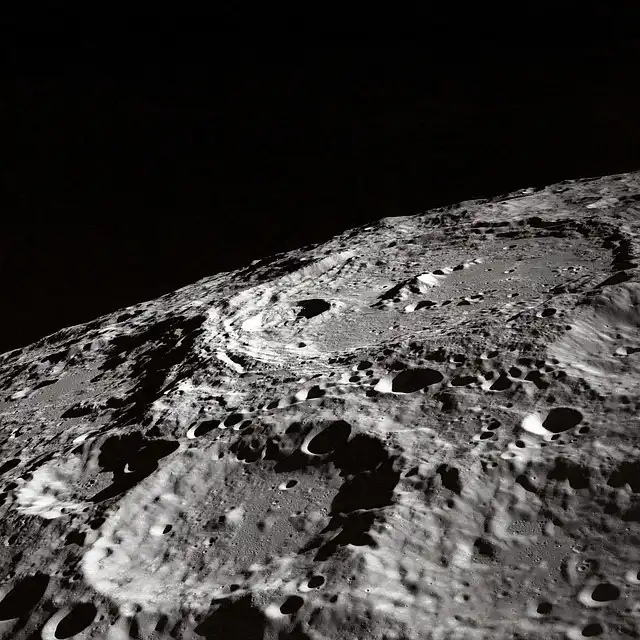
The Chicxulub asteroid impact 66 million years ago created a vast, hot, underground hydrothermal system that sustained microbial life for at least 8 million years, longer than previously thought.
Drill cores at the influence site of the Chicxulub asteroid show proof that, together with prevalent devastation, the accident created a vast below ground environment loaded with hot water that protected microbial life
Impact’s Enduring Underground Legacy
The Chicxulub asteroid, which rammed Planet 66 million years earlier at what is now Mexico, is thought to have actually been as large as 15 kilometres in diameter. The strike created a lot climate mayhem that it erased three-quarters of types in the world. All the dinosaurs other than the forefathers of birds came to be vanished and a nuclear winter season grasped the world for at the very least 15 years.
The asteroid strike that eliminated the dinosaurs struck with such force that it took at least 8 million years for the effect site to cool off, producing a warm below ground community where tiny life prospered.
“This provides more chance permanently to develop, spread and evolve,” says Pickersgill. “It sustains the principle that very early life in the world might have found a lasting home in impact craters, and possibly even life on other earths where these enormous effect craters are dominant surface area functions.”
A Cradle for Early Life
Its effects were also felt deep underground. “The Chicxulub effect was big sufficient to create contortion at least 35 kilometres under the surface of the Earth, obvious making use of geophysical surveys,” says Annemarie Pickersgill at the College of Glasgow, UK.
“Large impacts do not merely destroy settings,” he states. “They can additionally produce long-lived underground systems where warm liquids distribute via shattered rock. These chemically abundant settings may provide sheltered habitats for germs and probably even favourable conditions for a few of the very early chemical actions in the direction of life.”
“We got a series of ages from the moment of impact at 66 million years ago to about 58 million years back,” claims Pickersgill. “That informed us that hydrothermal activity was continuous in a minimum of part of the Chicxulub structure for 8 million years after the impact.”
Chris Kirkland at Curtin College in Perth, Australia, claims while there is “not a completely distinct record of continual hydrothermal activity” at Chicxulub, the evidence is solid that the influence website remained hot for numerous years.
Formerly, it was assumed it took just 2 million years for the influence site to cool off. Now, Pickersgill and her colleagues claim it may have taken a minimum of four times longer, providing hydrothermal life much more time to flourish.
The effect melted concerning 10,000 cubic kilometres of rock, she claims. The mix of melted rock and salt water created porous product loaded with tiny pockets of hot water, referred to as a hydrothermal system.
Evidence from Drill Cores
To figure this out, the group pierced 1 kilometre into the crater to obtain rock cores. The scientists can determine the amount of argon caught in the examples to discover out their age because potassium in the rocks has rotted right into argon gas over time.
As a result of the existence of minerals that just form where there is liquid water and warmth, we know that the planet would have created hydrothermal settings to depths of a number of kilometres. However the range and life expectancy of the home heating and resulting hydrothermal system has, it seems, been massively taken too lightly.
The Chicxulub asteroid, which clashed with Planet 66 million years back at what is now Mexico, is thought to have actually been as large as 15 kilometres in size.” Large impacts do not just damage atmospheres,” he says. “They can also create long-lived underground systems where hot liquids circulate through smashed rock. These chemically rich settings may provide sheltered environments for microbes and maybe also good problems for some of the early chemical steps towards life.”
1 Ancient Life2 asteroid crater
3 Chicxulub impact
4 dinosaur extinction
5 hydrothermal system
6 microbial life
« AI Disproves Erdős Conjecture: New Math, New Questions on TransparencySynesthesia: When Senses Blend – A Colorful World »